
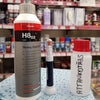
Repair car scratches and chipped paint with touch-up
, by Ivo Reins, 3 min reading time
, by Ivo Reins, 3 min reading time
Learn how to repair small car scratches and stone chips at home using the touch-up method. Step-by-step guide, tools, tips, and common mistakes.
Professional car painting is expensive and time-consuming. Leaving small scratches unrepaired can lead to rust formation, as paint and clear coat act as a protective layer that prevents the metal from oxidizing. This guide explains how to repair minor body damage at home using the touch-up method.
This method is suitable for damage no larger than a 2-cent coin. When repairing larger areas with a brush, achieving an even and visually uniform finish is unlikely.
Preparation
Rust-stop primer (if the damage goes through the original primer down to bare metal)
Waterproof extra-fine grit sandpaper (P1500, P2000, P2500) and polishing compound for a perfect final finish
For best color accuracy, paint should be purchased from an automotive paint store by bringing a sample of the body panel and preferably the paint code, or by bringing the car itself to ensure precise color matching. If the most common version of the color code is used, it matches well in approximately 90% of cases. Instructions on how to locate the paint code are provided separately.
Painting should preferably be done in an enclosed environment where dust and insects cannot settle on the painted area. The minimum required temperature for painting is +10 °C.
If paint or rust-stop primer is accidentally applied outside the intended area, wipe it off immediately with a wipe or towel - once it dries, the result will look worse than before painting.
Step 1.
Degrease the surface and polish it by applying a small amount of polishing compound to the dense side of a microfiber towel. This helps accurately identify which areas are deep enough to require paint filling. After polishing, thoroughly remove all remaining compound with the clean side of the towel, including compound that has temporarily filled defects rather than actually polishing them out.
Step 2.
If the damage reaches bare metal, use iron fallout remover to remove oxidation layer, apply a small amount of rust-stop primer or rust conserver (wipe off immediately if applied outside the damaged area). Allow it to dry for the time specified by the manufacturer (usually from 1hr to 6hr, read on packaging).
Prepare the touch-up pen for use:
Shake the container thoroughly.
If using a brush, lightly wipe off excess paint before application to make it easier to apply thin layers.
If using the syringe-style tip, unscrew the cap, gently squeeze the container, and while keeping it compressed, screw the cap back on. This reduces internal pressure and allows better control of paint flow.
Step 3.
Degrease the surface again and begin filling the damage using the touch-up paint syringe tip. Do not apply too much paint in one go - it is important to apply multiple thin layers rather than one thick one. Excess paint will cause layering and color mismatch.
If paint is applied inaccurately, remove it immediately with a cloth, as correcting it later will be significantly more difficult.
Step 4.
Wait 15 minutes, then apply the next layer of paint to fill any remaining or insufficiently filled areas and to correct spots where the color result is not satisfactory. Repeat till damage is fixed.
Step 5.
Allow the paint to dry for 24 hours. If a small bubble or unevenness has formed, level it before polishing using waterproof fine-grit sandpaper (P1500 or P2000).
After sanding, polish the area by applying a small amount of polishing compound to the dense side of a microfiber towel and polish until the result is visually satisfactory.


